102A255P General Electric Aircraft Turbojet Engine Data Ge G.e. Plate J47 DPL-0126
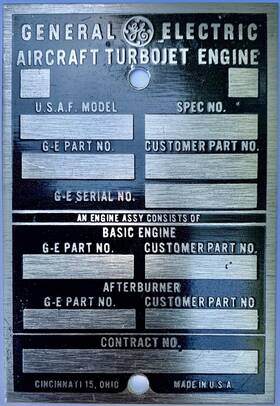
( Brand: G.e ), ( Manufacturer Part Number: 102A255P ), ( Part Type: Engine Data Plate )
Review G.E G.e. Original General Electric Aircraft Turbojet Engine Data Plate Ge J47
The GE 102A255P General Electric aircraft turbojet engine is a powerful and efficient aerospace powerplant, renowned for its reliability and high performance. This engine is identified by the data plate number DPL-0126, which is a crucial component that provides vital information about the engine's specifications, serial number, and production details.
The GE 102A255P engine is a single-shaft, axial-flow turbojet engine. It is designed for medium to high bypass ratio applications, making it suitable for various commercial and military aircraft. The engine features a compact design, with a diameter of approximately 37 inches and a length of around 125 inches.
The engine core consists of a compressor section, a combustion chamber, and a turbine section. The compressor section is a 12-stage axial-flow compressor, which compresses the incoming air to a pressure ratio of approximately 15:1. The combustion chamber is a annular, can-annular design, which provides efficient fuel combustion and minimal emissions. The turbine section is a 2-stage axial-flow turbine, which extracts energy from the high-temperature exhaust gases to power the compressor.
The engine is capable of producing a maximum thrust of around 10,000 pounds-force (44.5 kN) and a maximum continuous power output of around 9,000 pounds-force (40 kN). It operates at a maximum airflow rate of approximately 60 pounds per square foot (285 kg/m ), and a maximum engine inlet temperature of around 1,900 degrees Fahrenheit (1,038 degrees Celsius).
The data plate DPL-0126 provides important information about the specific engine, including its serial number, production date, and critical design features. The serial number, which is typically located near the center of the plate, uniquely identifies the engine and allows for traceability throughout its lifecycle. The production date indicates when the engine was built, which can be useful for determining its age and potential maintenance requirements. The critical design features, such as the engine type, thrust class, and performance data, are also detailed on the plate.
In summary, the GE 102A255P General Electric aircraft turbojet engine is a high-performance, reliable, and efficient powerplant, identified by data plate DPL-0126. This engine is a single-shaft, axial-flow turbojet designed for medium to high bypass ratio applications, capable of producing a maximum thrust of around 10,000 pounds-force (44.5 kN) and a maximum continuous power output of around 9,000 pounds-force (40 kN). The data plate DPL-0126 provides essential information about the specific engine, including its serial number, production date, and critical design features.
Buying a General Electric (GE) aircraft turbojet engine, such as the GE102A255P with the data plate number DPL-0126 and the specific model being the J47, comes with several pros and cons that potential buyers should consider before making a purchase.
Pros:1. High Thrust-to-Weight Ratio: The GE J47 turbojet engine is known for its impressive thrust-to-weight ratio, making it a popular choice for medium to large-sized aircraft.
2. Reliability: GE engines have a reputation for being reliable and durable, which is essential for aircraft engines.
3. Fuel Efficiency: The J47 engine is relatively fuel-efficient compared to some other engines in its class.
4. Wide Applications: The GE J47 engine has been used in various applications, including military and civilian aircraft, making it a versatile choice.
5. Spare Parts Availability: Given the wide usage of GE engines, spare parts are generally readily available.
Cons:1. Complexity: Turbojet engines, in general, are complex machines, and the GE J47 is no exception. This complexity can lead to higher maintenance costs.
2. High Maintenance Requirements: Turbojet engines require regular maintenance to ensure they continue to function correctly. This maintenance can be time-consuming and expensive.
3. Noise Level: Turbojet engines are known to be noisy, which could be a concern for buyers who prioritize quiet operations.
4. Emissions: Turbojet engines produce high levels of exhaust emissions, which could be a concern for buyers who prioritize reducing their carbon footprint.
Conclusion:The decision to buy a GE102A255P J47 turbojet engine depends on the specific requirements and priorities of the buyer. The engine's high thrust-to-weight ratio, reliability, fuel efficiency, and wide applications make it an attractive option for many. However, the complexity, high maintenance requirements, noise level, and emissions should also be considered. Ultimately, buyers should weigh the pros and cons carefully before making a decision.
Recommendation:If the buyer's priority is a powerful, reliable, and fuel-efficient engine for medium to large-sized aircraft, the GE102A255P J47 turbojet engine could be an excellent choice. However, if the buyer is concerned about noise levels, maintenance costs, or carbon emissions, alternative engine options may be worth exploring. It is essential to consult with engine experts or professionals in the aviation industry to make an informed decision.
Details:
part #: 102a255p price
- $41.95
specifications aviationpar:
- brand: G.e
- mpn: 102a255p
- part type: Engine Data Plate
payments aviationpar:
- other
- wallet: Apple-pay
- credit card: Mastercard
seller aviationpar:
- # reviews: 15501
- city: Lake Geneva, Wisconsin
- rating: 100.0%
offer aviationpar:
- sold: 0
- quantity: 6
- options: Ship-to-home
- availability: In Stock
- started: January 23, 2026
returns aviationpar:
- policy: Returns Accepted
- time: 30 Days
- paid by: Seller
shipping aviationpar:
- carrier: USPS
- cost: $0.00
- transit: 4-8 Days
- class: Standard
- service: USPS Ground Advantage
- type: Fixed
general aviationpar:
- Parts Accessories > Aviation Parts Accessories > Parts
- condition: New other see details
G.e 102A255P Is Similar To:
- Ea Light An3096-5 Labs Nos Aircraft Used Assembly Box Original Red (30.6% similar) Nos recognition lamp assembly. Same as the grimes model although this was property of the us air force. This item was taken out of the box it was sealed in for the first time...(March 3rd, 2015)
- J3sc Eastern Aircraft Acc Inc Original Style Piper J2 J3 J5 Shock Bungee Cord Covers Hundreds Sold Usa Md (26.5% similar) Made in the USA. They are made of a vinyl laminate material that is impregnated with nylon fibers that is as tough as steel. These are patterned after the original type bungee covers...(January 27th, 2016)
- 2ch1c1 Ge118787 General Electric 1944 B-29 Original Airplane Manual Book 2ch1d1 Preliminary Instructions (31.8% similar) 1944 large old book with a lot of pages...(January 23rd, 2016)
- Us Gov 41361-5 Aircraft Cockpit Light Lens Filter Ftfuel Filterft P n Uh-1n Original (25.1% similar) Last photo BM46220BATCH for reference/inventory purposes...(October 9th, 2023)
- Continental C125-2 Original Data Plate Sn 1522-6-2 (41.1% similar) This is different from any data plate I have ever had. Look closely. Note, I have purchased a cache of the most unusual data plates ever had. First class for $4.50 or USPS priority mail, $8.80. So neat!, I am offering an original continental C125-2 data plate, Sn 1522-6-2. Certification status, ...(December 18th, 2023)
- Cadillac Cps-0005 Original Serial Plate Acid Etched Brass 1909 11 (33.1% similar) The plate is compatible with Cadillac vehicles and has a manufacturer part number CPS-0005. The product is an original Cadillac serial plate made of acid-etched brass, from the years 1909-1911 or later...(December 19th, 2024)
- Enstrom 28-17104-1 Helicopter Plate Wear Forward Original Part (22.2% similar) Original new part from Angstrom...(March 8th, 2025)
- Grumman American Agac Tiger Aircraft 5101025-502 Original New Cheetah Traveler Cowling Support Rod Rh Copilots Side (29.1% similar) The shipping charges and/or items with free apply to the 48 contingent states. All goods are sent in secure packaging. New Grumman tiger cheetah traveler cowling support rod Rh copilots side...(December 9th, 2025)
- Grumman Aircraft 89c41510 Vintage Rudder Pedal Original Cockpit Hardware (27.9% similar) The vintage Grumman aircraft rudder pedal is an original cockpit hardware piece with the manufacturer part number 89C41510. This product is a rare and collectible item for aviation enthusiasts those interested in vintage aircraft parts...(March 14th, 2026)
