HAMILTON STANDARD 538826 Prop Deice P/n
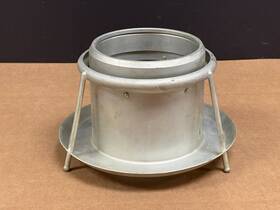
( Brand: Hamilton Standard ), ( Manufacturer Part Number: 538826 ), ( Part Type: Prop )
Review HAMILTON STANDARD Prop Deice P/n New
The Hamilton Standard 538826 Propeller De-Icing System is a crucial component for ensuring safe and efficient aircraft operation in wintry conditions. This system is designed to prevent ice accretion on the propeller blades, which can reduce thrust and cause aerodynamic instability.
The 538826 Propeller De-Icing System is engineered to integrate seamlessly with many aircraft models. It uses a hot liquid electrically heated fluid, which flows through tubing that is mounted on the surface of the propeller blades. The addition of anti-freeze solution ensures that the fluid stays liquid even in extremely cold temperatures.
Each de-icing tube is individually controlled by a liquids come-along system, which ensures optimal coverage and even heating for each blade. The system's automatic control functionality enables it to sense ice build-up and initiate de-icing cycles as needed, providing reliable and effective ice protection at all times.
The 538826 Propeller De-Icing System is designed to be robust and durable, with a high-temperature alloy material construction that provides excellent resistance to corrosion and wear. It has been rigorously tested to meet the stringent requirements of aerospace engineering, ensuring optimal performance and safety.
The installation process for the Hamilton Standard 538826 Propeller De-Icing System involves mounting the de-icing tubes on the propeller blades and wiring the control system into the aircraft's electrical system. The process requires specialized training and expertise, and should only be performed by certified maintenance personnel.
In conclusion, the Hamilton Standard 538826 Propeller De-Icing System is an essential safety feature for aircraft operating in icing conditions. Its robust design, automatic control functionality, and effective ice protection make it a valuable addition to any aircraft, promoting safer and more reliable flights.
The Hamilton Standard 538826 propeller de-icing system is a popular solution for aircraft operators seeking to improve safety and operational efficiency in snowy and icy conditions. Here are some potential pros and cons of investing in this system for your aircraft:
Pros:1. Improved safety: Propeller de-icing ensures the blades remain free of ice, reducing the risk of engine failure or losing thrust during takeoff, in turn minimizing the risk of accidents caused by icing conditions.
2. Enhanced performance: De-icing prevents ice accumulation on propellers, allowing for optimal blade efficiency and performance, reducing fuel consumption and preserving engine life.
3. Extended mission capability: With the capability to operate in icing conditions, the aircraft can expand its mission scope and expand its utility in regions with harsh winter weather.
4. Reduced delays: Airlines and operators can save operational costs by minimizing cancellations and delays caused by icing conditions, as they can rely on the propeller de-icing system to ensure preparedness for adverse weather.
5. Minimal impact on aircraft: The 538326 system is engineered for minimal impact on the aircraft, with an external design that doesn't require major modifications to the airframe or wing structure, preserving the aircraft's integrity.
Cons:1. Installation cost: The Hamilton Standard 538826 system requires professional installation, significant labor hours and technical expertise, making the upfront cost substantial.
2. Maintenance requirements and cost: Regular maintenance is necessary, including inspections and replacement of parts, increasing the ongoing operational cost.
3. Complex issue resolution: In case of a malfunction, addressing problems with the propeller de-icing system can be complex and time-consuming, requiring specialist knowledge and resources.
4. Limited availability: This system is not widely available on all aircraft types, restricting its applicability to specific models that are equipped with the compatible hardware and infrastructure for installation.
Conclusion:With the pros of improved safety, enhanced performance, extended mission capability, reduced delays, and minimal impact on the aircraft, the Hamilton Standard 538826 propeller de-icing system brings substantial benefits for airline operators and aircraft owners. However, the cons, such as the high installation cost, ongoing maintenance requirements, complex issue resolution, and limited availability, must be carefully considered before investing in this expensive but highly valuable system.
Recommendation:For operators that frequently fly in icing conditions or serve regions with harsh winter weather, the benefits of the Hamilton Standard 538826 propeller de-icing system are likely to outweigh the costs, making it a worthwhile investment for improving safety, expanding operational capabilities, and reducing delays. An initial cost analysis should be prepared, factoring in the installation cost, ongoing maintenance expenses, and potential fuel savings to determine the system's overall ROI. Additionally, it is crucial to verify the aircraft's compatibility with the system and consult with certified maintenance providers to ensure proper installation and follow-up maintenance.
Details:
Buyer receives Hamilton Standard Housing, Oil Pump Assay P/N 538826 New Surplus. LOC: 30-F-GRD RW7 M1870.
part #: 538826 price
- $39.00
specifications aviationpar:
- brand: Hamilton Standard
- mpn: 538826
- part type: Prop
returns aviationpar:
- policy: No Returns
offer aviationpar:
- availability: In Stock
- quantity: 1
- best offers: True
- started: January 28, 2025
- sold: 0
- options: Ship-to-home
general aviationpar:
- Parts Accessories > Aviation Parts Accessories > Parts
- condition: New other see details
payments aviationpar:
- other
- credit card: Discover
- wallet: Google-pay
seller aviationpar:
- rating: 99.8%
- # reviews: 8248
- city: Arcadia, Florida
shipping aviationpar:
- class: Economy
- transit: 2-6 Days
- service: Economy
- cost: $19.95
- type: Fixed
Hamilton Standard 538826 Is Similar To:
- 12d40-ag100-2 Other Hamilton Standard Propeller Manual (53.6% similar) Got a question. Any of an item is for the sole purpose identifying. Hamilton Standard propeller maintenance manual with parts list for 2D30-AG100-2 and 12D40-AG100-2 propellers. All manuals are sold for reference purposes only and do not necessarily reflect current updates. It is used, in good ...(December 31st, 2016)
- 23d40 Standard Hub Hamilton Assembly Propeller (38.2% similar) One 23D40 Hamilton Standard hub assembly no support blocks in serviceable condition...(March 12th, 2015)
- 42d16-054 Hamilton Standard 2d30 Nut (53.2% similar) ...(September 22nd, 2017)
- 750654-1 Hamilton Standard Pre Cooler (57.5% similar) ...(October 31st, 2017)
- 782490-12 Hamilton Standard Aircraft Propeller (56.2% similar) Any is for the sole purpose of identifying an item. New listings added weekly and usually daily. Big props aviation - your source for aircraft parts. Airworthiness is only determined by the FAA approved mechanic or certified repair station. Your source for aircraft parts...(April 27th, 2017)
- Ad32449-2 Hamilton Standard Cabin Temperature (50% similar) Part number - AD32449-2. United technologies Hamilton Standard test set cabin temperature control...(April 9th, 2017)
- Gs12759-1 Kellstrom Squeegee Kelstrom Tools Hamilton Standard Corporation (37.9% similar) GS12759-1 squeegee maelstrom tools Hamilton Standard corporation new other...(December 16th, 2018)
- 22d30 54822 Kell-strom Hamilton Standard Retaining Nut Wrench Serviceable (39.7% similar) Used on BEECHCRAFT18 etc this is the early Hamilton Standard P/N that was changed to HSP1483. A rare and hard to find tool that is used on the Hamilton Standard 22D30 propeller. This wrench has signs of use, holes for turn bar are elongated, but it will outlast any usage you can put on it. It will ...(May 12th, 2016)
- 43d50 1832 Kell-strom Hamilton Standard North American T-28 Dome Nut Wrench New (49.2% similar) The 43D50 propeller is used on the north American't 28'S with Curtis's wright R1820 engines with a sae 50 shaft. A rare and hard to find tool that is used on the Hamilton Standard 43D50 propeller...(April 30th, 2016)
- 54933d Unknown Wwii Aircraft Propeller Nut Removal Tool Hamilton Standard (29.3% similar) 75 see photos. Therefore I cannot guarantee the airworthiness of this particular part or any other part or item that I have listed or sold to you, the end purchaser. Take a look at my other aviation related items. Using USPS or FedEx and the global shipping service. I have not been able to properly ...(May 7th, 2016)
- Hamilton Standard Na5-6164 Actuator Valve (47.6% similar) Airworthiness is only determined by the FAA approved mechanic or certified repair station. Any is for the sole purpose of identifying an item. P/n NA5-6164. 134 aircraft part for sale: Hamilton Standard actuator valve...(December 25th, 2023)
