AIRSPORT Ifr-lcd Altitude Alerter Ifr Lcd
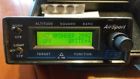
( Brand: Airsport ), ( Manufacturer Part Number: IFR/LCD )
Review AIRSPORT Ifr lcd Altitude Alerter
The AirSport IFR-LCD Altitude Alerter is a state-of-the-art aviation tool designed to enhance the safety and precision of your flights. This altitude alert device features a high-resolution LCD display that clearly shows your altitude, airspeed, and other essential flight data. The LCD screen is backlit for easy readability in various lighting conditions, and the digital display provides accurate and reliable readings.
The AirSport IFR-LCD Altitude Alerter is equipped with an advanced altitude alert system that provides audible and visual alarms to warn you when you approach or exceed your designated altitude. The device allows you to set multiple altitude alerts, which can be customized to your specific flight plan. This feature is particularly useful for VFR and IFR flights, as it helps to prevent altitude breaches and maintain safe separation from other aircraft.
The AirSport IFR-LCD Altitude Alerter is compact and lightweight, making it easy to carry in your cockpit or avionics panel. The device is powered by a rechargeable lithium-ion battery that provides up to 10 hours of continuous use on a single charge. The battery can be charged using the included USB cable, and the device also features a low battery warning system to ensure you never run out of power during your flight.
The AirSport IFR-LCD Altitude Alerter is built with high-quality materials and components to ensure durability and reliability. The device is water-resistant and shock-resistant, making it suitable for use in various weather conditions and environments. The AirSport IFR-LCD Altitude Alerter is an essential aviation tool for any pilot who values safety, precision, and peace of mind during their flights.
Pros of buying an AirSport IFR-LCD Altitude Alerter:1. Enhanced Safety: The altitude alerter provides real-time altitude information, which can help pilots avoid obstacles and maintain safe altitudes, reducing the risk of accidents.
2. Improved Awareness: The LCD display provides clear and easy-to-read altitude information, improving the pilot's situational awareness.
3. Easy to Use: The AirSport IFR-LCD Altitude Alerter is simple to install and use, making it an accessible option for both experienced and novice pilots.
4. Cost-Effective: Compared to other aviation equipment, the AirSport IFR-LCD Altitude Alerter is relatively affordable, making it a practical investment for many pilots.
Cons of buying an AirSport IFR-LCD Altitude Alerter:1. Limited Functionality: While the Altitude Alerter provides essential information, it does not offer the same level of functionality as more advanced avionics systems.
2. Potential Compatibility Issues: Some older aircraft may not be compatible with the AirSport IFR-LCD Altitude Alerter, requiring modifications or upgrades.
3. Dependence on Battery Power: Like all electronic devices, the Altitude Alerter relies on battery power. If the battery fails, the device will not function, which could be a safety concern in certain situations.
Conclusion:The AirSport IFR-LCD Altitude Alerter is a valuable tool for pilots looking to enhance their safety and situational awareness without breaking the bank. While it has some limitations, its ease of use, cost-effectiveness, and potential to prevent accidents make it a worthwhile investment for many pilots. However, it's essential to consider the specific needs and requirements of your aircraft to ensure compatibility and to develop a backup plan for potential battery failures.
Recommendation:If you are a pilot looking for an affordable and easy-to-use altitude alerter, the AirSport IFR-LCD Altitude Alerter is a solid option. However, before making a purchase, make sure to research your aircraft's compatibility and develop a backup plan for battery failures. It's also a good idea to consult with an aviation expert or your aircraft's manufacturer to ensure that the device will meet your specific needs.
Details:
After reaching target altitude, any deviation outside the tolerance zone produces warnings. The horn switch on front panel turns all sounds off and enables pilot to quickly silence Airsport unit when needed. To keep extraneous echoes off the controllers scope, FAA developed ascribes, or air traffic control radar beacon system.
Or, they request altitude and decode the reply as. When the target is reached, a single tone again heard. This collision avoidance equipment installed in airliners asks other aircraft for their altitude. Target altitude delectable 100 ft to 17,900.
Pressure altitude, density mad and many more features. Prior to reaching the selected target, a single tone sounds. Mad adjustable from 100 ft to 17,900. The Airsport altitude alerter are very easy to use and will work in any aircraft, with headset, nearly location.
The ground equipment asks for a squawk and they interpret reply pulses as. Mode c interrogations also come from Tc's. The antenna is contained within case. There is no difference between mode a and c data.
Squawk code always displayed. How does it work. Everything connects.
Inside the Airsport alerter, it is a more difficult task. Barometric pressure is adjustable from 27. It is possible to be out of range ground based radar, but still responding an airliner with Tc's. They are identical.
There are two types of interrogations and replies. It also provides a direct, audible warning from the internal horn located on back panel. The Airsport ifr lcd displays altitude from to 99,900 ft and your target is delectable 17,900. Pressure altitude displayed ft to 126,700.
Approach function with gear reminder, mad warning, and more. But if the interrogation is mode c, transponder replies with coded pulses containing altitude. Barometric pressure 27. Other features and specifications: 32 character backbit lcd display.
These fly up and down tones are repeated every ten seconds until the altitude is within tolerance. All transponders use the same data encoding scheme and transmit on frequency of 1090 MHz. The tolerance zone is user delectable. There are 4096 squawk codes, and 1280 of them also decode as altitudes.
Mode A/C reply count - provides information about the radar environment and Tc's. Sorting mode a from c is an important part of the microcomputers job. Contrast and led back light brightness are pilot adjustable. First there was radar.
This gives a range, in 100 ft steps, from to 126,700. This works, not only on planes, but trucks and weather so. The headset tones use a variety of distinctive sounds, and are adjustable in volume. Airsport ifr lcd altitude checker the is perfect model for pilots that fly at less than 18,000 ft.
The Airsport alerter produces audible warnings via headset and or aircraft audio system. Density altitude displayed ft to 25,200. It is this reply that used by the Airsport altitude alerter. Operates on volts , or about 8 hrs internal rechargeable battery.
Altitude displayed to 99,900 ft. It isn't radar at all, but comes up on the same scope and controller calls. The receiver in Airsport alerter is tuned to 1090 MHz and it picks up data.
Inside the pro is 1090 MHz receiver, a microcomputer, and circuitry required to display data, make warning tones, so on. Digital rate of climb, resolution 1 FM.
If the interrogation is mode a, reply a coded pulse stream consisting of four digit squawk code. Ascribes sends out an interrogation and the transponder in aircraft replies. Retail: to 31. If the aircraft climbs above or below tolerance zone, a musical trill is heard for each one hundred feet of deviation from target.
Includes: Airsport ifr, 14 28v cigarette lighter cord, 110v charger, audio Velcro, users manual, and protective carrying case. Mode a means squawk. The beacon is what we call a transponder. This commonality is what allows you to use the Airsport in any aircraft.
Its easy for them, since they know what requested. 21 inches Hg.
specifications aviationpar:
- brand: Airsport
- mpn: Ifr/lcd
Returns aviationpar:
- policy: no returns
Seller aviationpar:
- city: Mansfield, Ohio
- zipcode: 44904
Payments aviationpar:
- PayPal
Offer aviationpar:
- Started: March 27, 2018, 9:49 am
- best offer: true
- quantity: 1
- Sold: 0
- bids: 0
Shipping aviationpar:
- handling: 2 days
- type: Flat
- cost: $15.0
Ratings:
- Five Star Thank you from MikesMensMagneticJewelry in Suring, WI 03-27-18
- A A A very good 03-12-18
- Thank you very much and welcome to visit us again 03-24-18
- Good buyer, prompt payment, valued customer, highly recommended. 03-13-18
- Good buyer, prompt payment, valued customer, highly recommended. 03-26-18
General aviationpar:
- in stock: Yes
- condition: New other see details
- motors > parts accessories > aviation parts accessories motors > other aviation parts accessories
